Sunday, 11 August 2024

 Another local eccentric

Since the start of my research into the history of Sopwell, I have unearthed quite a few colourful characters over the years. Who can forget the Rev Anthony Hart-Synnot of St Stephens who cadged lifts from passers by and conducted weddings in his football boots, or the antics of George Butterfield and family of Sopwell Mill Farm? Well here is another eccentric who has been simmering under my radar for years.
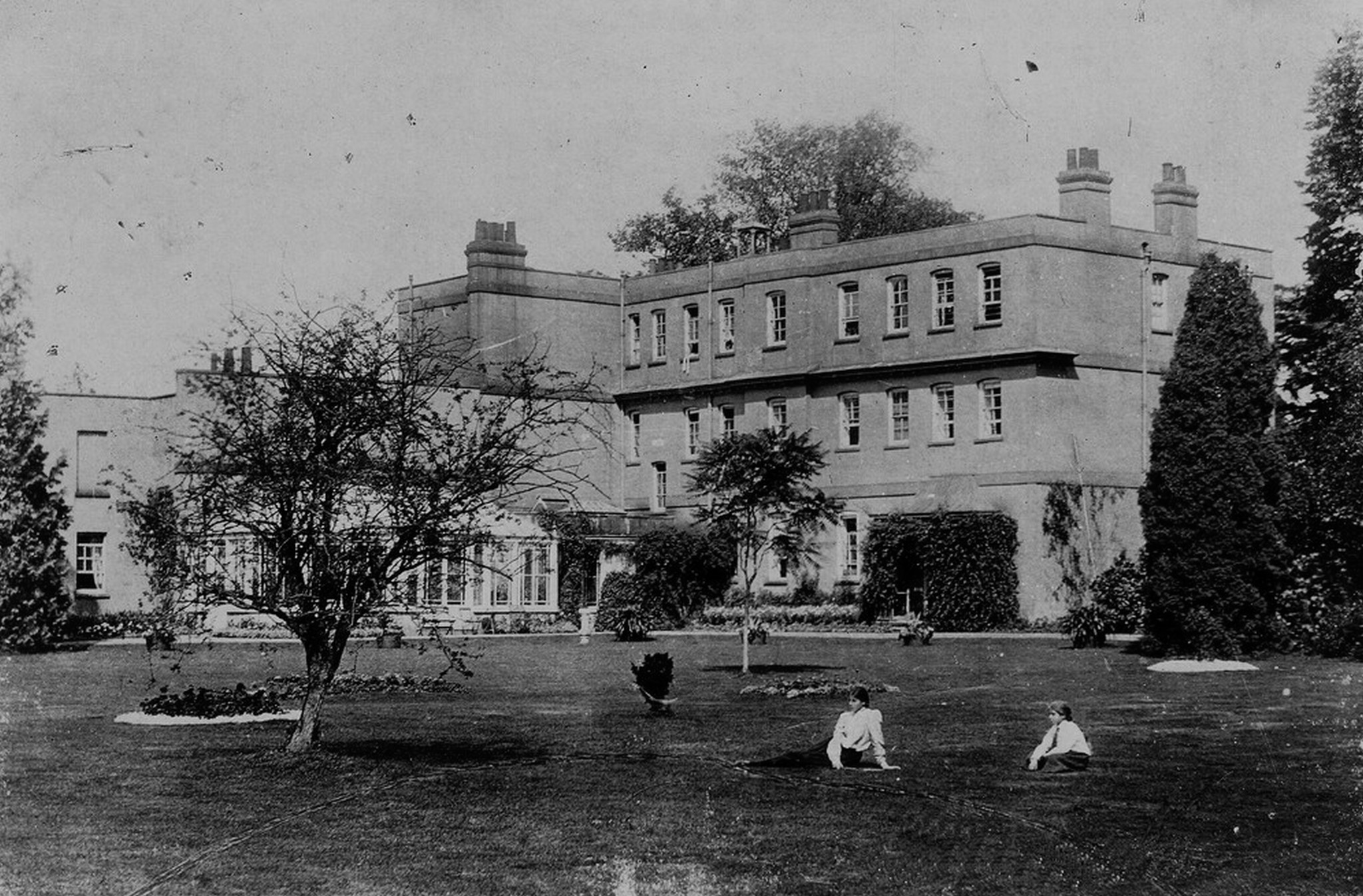
I was prompted to write a post about Lady Barnett who lived in Sopwell House in the early part of last century after having visited Bernard Knight who was keen to share his memories of living in Nuns Lane in the fifties and sixties. Bernard happens to live in a lovely old house on the Gorhambury Estate. I jumped at the chance to visit him as, in all the fifty odd years I have lived in the area, I never had the opportunity or privilege to visit that part of St Albans. I still haven’t seen the house but I have now seen the ruins of Old Gorhambury and the beautiful countryside of the estate.

So what has Bernard got to do with Lady Barnett? Well he discovered the grave of a dog which used to belong to Cedric, Lady Aline’s son. It was Cedric, according to Betty Terry of Sopwell Gate Lodge, who owned a boomerang! And Bernard’s father, Jack, was a postman whose round included Sopwell House and he mentioned her as being quite a character.

My latest post is about Lady Aline Barnett who was born into the Grimston family. She was the daughter of the 3rd Earl of Verulam. And it wasn’t only Jack who mentioned her when being interviewed - Betty Terry and Mary Myers also remembered her as being constantly in trouble with the law over her dangerous driving and non-payment of parking fines. Rather like Mr Toad from Wind in the Willows, she loved speeding and breaking the speed limit. And the fame of her brushes with the law spread all over the country and also abroad. I found several press clippings covering her court cases in the USA as well in the UK. Goodness knows what her husband and family thought of her. She was still being pulled over in her eighties but this time for going slow in the fast lane! Go to Sopwell Memories to read all about the eccentric lady Aline Barnett.


Sunday, 24 March 2024

 How are the mighty fallen!


There have been a few changes to the area since my last post. March 2024 marks the end of the once magnificent horse chestnut tree in St Stephens churchyard. Planted in November 1785 it has become a landmark in Sopwell as well as from the King Harry roundabout. The tree was diseased and had to go. The PCC of St Stephen's church promise there will eventually be another one planted. Let's hope so as the churchyard will look very bare without it. 

Talking of trees, we still have a few left in Sopwell, most of them in St Stephen's churchyard. The cedar tree is one example and there are several old oak trees there. We must respect these mighty specimens which are just as important - if not more - than old buildings. I know of one lovely oak tree near the garages by Mandeville School which was felled without consultation.

Another recent change is the official opening of another new road in Sopwell called Jenny Lane, The lane was built on the land behind Leyland Avenue where the youth club used to be.

Please have a look at these recent posts and feel free to leave comments.


Saturday, 27 August 2022

Woad Mead to the S4 bus


Woad Mead to the S4 bus!


I’m finding more interesting stuff about Sopwell while working on the St Albans & Hertfordshire Architectural & Archaeological Society (SAHAAS) St Julian’s project. At the moment, I am researching the history of a fascinating piece of land called Woad Mead which you can see on this extract of a medieval map of St Albans. Its position, just above Eywood Lane, maybe gives a clue as to what is there today – the Griffiths Way Retail Park (Sainsbury’s) and before that, the gasworks. I will be publishing an article on it hopefully and will then write a post on the website. Woad probably grew there at one time. It was used to dye wool proving Sopwell had a wool and textile industry in medieval times.


Last week I had the privilege of visiting what is probably the oldest house in Sopwell - if we don’t count the Sopwell House Hotel. Glebe House in Watling Street is a grade 2 listed property with lots of wonderful old features like wood panelling, an inglenook fireplace and an old cellar. It has a large garden which once extended to the footpath opposite the Marlborough Academy. Have a look at my post on Sopwell Memories. I was really interested in this house as it once backed on to the old vicarage garden. The vicar was a neighbour when there was a vicarage,

Unfortunately another of my interviewees, John Buckingham, has passed away, John was very special. I first met him on the S4 bus! John had so many memories to share including: what Cottonmill Lane was like years ago; his schooldays at St Peter’s school; his Dad’s allotment and loads of stories about the railway. He also shared fascinating stories about his Dad’s jobs at the gasworks and the stables/kennels opposite the Nunnery ruins. John remembers playing in the river, catching crayfish and walking all the way to the Park Street watercress beds. I had to have two interview sessions and several phone calls to cover all his tales! What is so wonderful is that these memories have been captured and won’t be forgotten. They can all be found on Sopwell Memories  and in our book Sopwell, a history and collection of memories. [Still available to purchase via the website] I went to his funeral, the church was packed. I am so pleased I overheard him talking on the S4 bus!.


Saturday, 11 June 2022

  Today, I went to visit the newly built Cottonmill Community and Cycling Centre, the successor to the Marlborough Pavilion in Old Oak off Cottonmill Lane and I was extremely impressed. Lots of careful planning has gone into its construction and design to make it appropriate for the whole community. Inside the main building there is a cafĂ©, a large function room which can be divided into three rooms, a kitchen, two changing rooms, toilet facilities and separate washing facilities for the Muslim community when they use the centre for worship. It even has a state of the art disabled toilet and changing facility complete with hoist! The other part of the centre is a Cycling Centre where cyclists can meet, buy cycling gear and have bikes checked over and repaired.

Outside, as well as the Multi-Use Games Area (MUGA) and football pitch, is a leisure track which circles round the football pitch and a fantastic pump track - a bumpy track -  for the more adventurous to try out. Loads of children were playing on it while I was there. The carpark has been well laid out and I was pleased to see. that there are three disabled bays.  Four fruit trees have been planted in a tiny wildlife meadow at the rear of the building and there are plans for a children's playground. There are plenty of seating areas outside where one can watch the cyclists as well as admire the beautiful Ver Valley.

Years ago, many of you may remember that Cottonmill used to have its own purpose built community centre funded by membership subscriptions. For around 20 years, it was a very popular social venue, especially for the elderly, but falling membership numbers meant it had to close. It opened ten months later under a different name - the Marlborough Club but that did not last long before it was burnt down. Since then there has just been the uninspiring prefabricated building - the Marlborough Pavilion - used mainly for clubs and the odd meeting, and as a changing room for footballers. It was a sorry looking building, never well liked or maintained neither inside nor outside and consequently was often vandalised. This new building is such a delightful contrast. It is bright and airy, looks beautiful and has been built with the whole community of Sopwell in mind.

When I was in charge of the SRA committee, I often dreamed of a having a a dedicated community centre. I was envious of community centres elsewhere like the ones in Fleetville and Cunningham Hill. There was talk of doing something with the Marlborough Pavilion years ago. The youth club land was another possible site but nothing happened.  At one point we were hoping that maybe the King Offa site would work. However, now thanks to the existing SRA committee's persistent campaigning for a new centre and a dedicated  group of fund raisers from the Cottonmill and Sopwell Hub (CASH), the dream of Sopwell having a purpose built community Centre has been realised and it is ten times better than Fleetville and Cunningham Hill! CASH raised £30,881 which is amazing. Many people bought engraved bricks and I made my mark!

Let's hope the whole community will use the Centre. The hiring of the halls is not expensive and all the activities outside are free. You can make bookings and check opening times at www.everyoneactive.com/centre/cottonmill-community-cycling


Monday, 23 August 2021

Looking back in time

While researching for the St Julian's Project, I have been looking into correspondence in the 1920s and 1930s between the Gorhambury Estate, land agents, solicitors and building developers concerning the purchase of land for building houses in our area. 

Lord Verulam owned most of the land in Sopwell and St Julian's. H.C. Janes from Luton was the developer. Janes built the Mentmore Estate. He also wanted to develop the Cottonmill Lane area and  St Julian's and went into lengthy negotiation to purchase what was mainly farmland. However the Council also wanted the land to build Council houses so there was a lot of compulsory land acquisition. 

It is fascinating stuff and I am trying to get my head round where all these parcels of land were because of course, most of the roads weren't there then. 

So I decided to orientate myself by having another look at the "Britain from Above" website. Their selection from the Aerofilms collection is so fascinating! It really is looking back in time. When I was working on the Sopwell project I interviewed several people who described what it was like when the estates were built and in these photos I can see what they are talking about. 

For instance, I remember Mrs Brown, John Buckingham and others talking about how Cottonmill Lane was reshaped after the war: "They built the road from rubble from London and built it up high, then cut the road across the field. At the back of these houses [from Boleyn Drive] there was a field that went right through to Priory Walk as it is now and then the road came along Priory Walk". In one of the photos I could see the bank in Priory Walk where it had been built up. And I remember Lil Day telling me how money was collected to pay for a new church in Abbots Avenue as all they had to worship in was a Nissen Hut - and the original Nissen hut can be seen in one of the photos! 

Also in the Gorhambury correspondence, I discovered that there was a proposal to build a secondary school in Sopwell. This was in 1936. At first it was going to be near the gasworks, with access to Doggetts Way, but that was proved unworkable so they were considering another 10 acre site in St Julian's. Looking at all the clues, it must have been near the elevated railway bridge by Little Sopwell Farm at the end of Butterfield Lane. The farm's boundaries were given as the St Albans-Watford railway and Watling Street from where it meets Park Street to the bottom of what is now Doggetts Way by the gasworks. I found this hard to imagine but the farm must have been quite large. I think the problem with this site had something to do with the lack of a sewer as a school was not built here either. The council must have looked elsewhere for a suitable plot. St Julian's was not built until the mid fifties.

---
Sandy Norman


Tuesday, 1 September 2020

Mine's a pint!

My topic in this post is about milk which used to be delivered in fat glass milk bottles from years ago. You know the ones with the cardboard tops? What prompted me to write was an email I had from Roger Miles who wanted to let us know about one of these milk bottles that he found on Bernards Heath which he thinks had been unearthed by a fox or maybe a badger. He says that the old claypits were used to dispose of St Albans' rubbish at one time.

Etched on the bottle, as you can see, is Sopwell Home Farm, W.G. Brown and on the base it has E. WIGG moulded on it. Well I knew about Sopwell Home Farm. It used to be attached to Sopwell House. W. G. Brown was the farmer. Ten years ago, I interviewed the lovely 90 year old Betty Terry for the Sopwell Project who told me that her father was the cowman on Brown's Farm in the 1920s - 1930s. Her family lived in Sopwell Gate Lodge but because of a dispute between her parents and Mr Brown over working in the dairy, they were kicked out: Sometime after we’d been there, Mr Brown wanted my mother to do the milk, sterilise it or whatever they do with it. The room was cold and damp and he wanted her to stay there and work and she had three young children to get ready for school in the morning so she just could not cope so they had a row, my Dad and Mr Brown, over it and he got the sack. Cos the house went with the job so we were homeless really. Mr Brown doesn’t sound very friendly.

I have seen bottles like this before. When I was doing my research for the Sopwell Project I visited Sopwell Mill Farm off Cottonmill Lane where the tenants showed me some of their milk bottle finds on the property. I was fascinated to learn that the bottles came from the three different dairy farms in Sopwell: Sopwell Mill Farm, Sopwell Home Farm and St Julian’s Farm. The farmer at Sopwell Mill Farm was Frederick Coaker who residents recall delivering the milk on his horse and cart. Apparently he wasn’t a very nice man either. He was described as a bit crotchety. The Muirs ran St Julian's Farm – the farmer was Archibald Muir and they also delivered their own milk. So all three farmers delivered their own milk. They must have shared each other’s bottles too.

Has anybody else found any of these bottles and does anyone know anything about E. Wigg from Watford? Google didn’t. Please share if you do by writing a comment. 


Tuesday, 28 April 2020

Brick walls – they go up, they come down

It’s been rather too long a time since I have written anything for the Sopwell blog. All I can say is many apologies. It’s not as though there has been nothing to report. There has, but I have not been able to get down to writing anything. Now, being in lockdown from the dreaded virus, I have made an effort to get going.

Sopwell’s landscape has changed over the last few years. Betty Entwistle House has been pulled down and a larger more functional dwelling for the elderly has been built in its place, called Eywood House. Also our only pub for years – until the Hare and Hounds became part of Sopwell – the King Offa, has also been demolished. As yet, nothing has been built on its footprint but it looks like it will be replaced with housing. For years the SRA had hopes that Sopwell might get a community centre out of it. Not so, although, it looks like the Marlborough Pavilion will be given this role thanks to the sterling work undertaken by the Cottonmill and Sopwell Hub (CASH) team to raise awareness and money to make this happen. And out of the gasworks site, we will have an Aldi and other retail outlets.


The most exciting thing to report is that some of us have become involved in another research project: St Julian’s.

Now some of you will say that St Julian’s is part of Sopwell. True, but St Julian’s boundaries start outside of Sopwell. Much of it is on the other side of Watling Street in Verulam ward and stretches as far as Greenwood Park in Chiswell Green.

If you recall Abbot Geoffrey, who was the Abbot of St Albans, founded a leper hospital c.1130 and dedicated it to St Julian (or St Gillian as it given on the 1666 map). The hospital was described as being built by the side of Watling Street and near the wood called Eye Wood. We know that it was situated almost opposite the entrance to Vesta Avenue in Watling Street.

After the dissolution of the monasteries, the land was granted to Sir Richard Lee and remained with his descendants until 1649. Then it was taken over by John Ellis who demolished what remained of the hospital and built himself a house, also called St Julian’s. This house had a walled garden and it was part of this wall that kicked off our research, as part of it still exists today as the boundary wall to some of the properties in Gillian Avenue on the Tithe Barn Estate.

A team of researchers from SAHAAS (St Albans and Hertfordshire Architectural and Archaeological Society) has been investigating all of the St Julian’s area. This includes, the leper hospital, St Julian’s Mansion and St Julian’s farm, St Stephen’s Church and surrounding lands etc. It’s very exciting. We are discovering lots of new information. One of the tenants of St Julian’s Mansion was a lady called Mrs Ashurst who stayed there for 50 years. She kept an account book in two volumes of all her purchases of goods and food from 1738 – 1785 until she died. All the pages have been photographed and we are kept very busy transcribing all the data. So far we have found out that she seemed to consume an awful lot of meat and was always buying mops!

The outcome of the project will be a publication, so watch this space.

---
Sandy Norman


Tuesday, 7 August 2018

Blasts from the past

Our Sopwell Memories website has had nearly 100,000 visits since we launched in 2014, 97,928 as I write. It is good to know that it is well used. In case you haven’t had a look at it lately, there has been a small flurry of new stuff which should interest you.

There have been several changes to Sopwell over the past year or so: Betty Entwistle House was demolished to make way for a new development presently under construction and also we have lost The King Offa pub. I have posted about Betty Entwistle and am waiting to see what happens on the King Offa site before I publish. We have also acquired several photos of living in the prefabs in Tavistock Avenue. Thanks to Michelle Mackenzie and family for letting me use them.

Back in 2011, while researching material for our book, I interviewed a lovely chatty lady living in Boleyn Drive, called Margaret Brown. Margaret was born in 1928 and lived on the Mentmore Estate since she was eleven, so she had plenty of stories to tell of her childhood growing up in the Cottonmill area. I put some of these stories in the book but I was denied permission to select extracts from the audio recording to put on the website. As I said in my previous blog, Margaret is no longer with us. However, permission has now been given by her family to use the material, so seven extracts of Margaret’s memories are now up on the website. I hope you will have a listen to them.

If you or members of your family have photos of the Sopwell area from long ago, I would be delighted to receive permission to include them on the website.

Enjoy the rest of the summer!

---
Sandy Norman


Wednesday, 25 October 2017

RIP

Over the past few years we have lost some of the lovely people interviewed for the Sopwell Project. It is inevitable, I suppose, given the age of some of those interviewed, but there are others who have been taken from us far too soon. I thought it would be appropriate to do a sort of memorial to their memory, although their stories will always be with us either in the book or on the Sopwell Memories website.

Before the book was published, we lost Betty Terry, which I regret to this day as she was really looking forward to seeing the book published. Many of you will remember the agonising we went through to find the money to put our research into print. I feel I should have tried harder. Betty was 90 when I interviewed her. She was one of my first interviewees and she was as enthusiastic as I was about the project. I found her through her son who saw a piece in the Herts Advertiser about the Project. As well as all her stories, she gave me several of her photos to copy and even drew me a map of where she used to play down by the river near Sopwell House. Such a lovely lady.

Then, soon after the book was published, we lost Tom Edgar. His late wife was buried in St Stephen’s churchyard and he shared some photos with me of her childhood in Tavistock Avenue.

Betty Cutler was a treasure trove of information, a lot of it about Sopwell Mill Farm and Cottonmill Lane. She also gave me a carrier bag full of papers that belonged to her late father, Edward Butcher. He had the unusual occupation of being a well sinker, not many of those around today, I would guess. He was a member of the Ver Valley Society and he left a bundle of papers from meetings and also some written notes on why the river flooded in the late 1970s. It was fascinating stuff. Betty sadly passed away a couple of years ago.

And then we lost Margaret Brown. She lived in Boleyn Drive and had many memories of when the Mentmore estate was built. Mrs Brown loved to talk and, as I loved to listen, it was a good interview. We are still hoping for her son to grant us permission to add her memories on the Sopwell Memories website.

Losing Russ Bowman this year was a real shock as he was not old, my age in fact. Russ gave a good interview and contributed loads to the Project, including images, as well as being a popular face on the St Albans Past and Present Facebook site. His family took comfort that his memories are preserved in the book and on the website. I was pleased to be able to hand a copy of his interview recording to his daughter.

Kathy Sinfield became a friend. She too had loads to tell me about living in Doggetts Way in the 1930s. I visited her several times. She and my Mum used to go to St Stephens’s lunch club together in Vic Foster’s bus until she became too frail. She passed away in July and I attended her funeral which was a week after the funeral for my husband Len. Not a nice time.

And just a few days ago, dear Bill Mackenzie (pictured) passed away very suddenly aged 78, so another one taken far too soon. His death prompted me to write this blog. He was another talker and had endless stories to tell me. Bill was the one who first told me about the murder in the allotments in 1948 and had me scurrying to the library to look up the reports in the Herts Advertiser. He was one of my first interviewees when I started collecting memories back in 2010. My interview technique then was very amateurish. I have given his family copies of the interviews. I hope they take this into account when listening to his memories.

I am not aware of any more deaths. I hope there aren't. I take comfort in knowing that they have left a lasting footprint and that they will never be forgotten.

---
Sandy Norman


Friday, 11 November 2016

Sopwell? – doh!

Real Bread
Apologies to you all for not having written anything for the last two years. Life has been getting in the way of the creative process and nothing much has inspired me to write - until now! So what has inspired me? Well in short, my daughter and the Real Bread Campaign.

What on earth has that to do with Sopwell, you ask. Indirectly, I think, quite a lot.

For a start, the name Sopwell comes from the pious women of the 12th century who lived on bread and water dipped in the well – sops. Also, we had three mills on our stretch of the river Ver where flour was milled for bread: New Barnes Mill, Sopwell Mill and Cottonmill. One of our streets is named after George Butterfield, the last miller of St Albans, and we also have Millers Rise.

But, milling, bread and flour have even more associations with our area. Many of you may not know that in Old London Road there used to be the Research Association of British Flour Millers Cereals Research Station. It was founded in 1923 and closed down when it merged with the British Baking Industries Research Association in 1967 to become the Flour Milling and Baking Research Association (FMBRA). This Research Association was based in Chorley Wood. I wonder how many of you have heard of or know about Chorleywood and bread-making? To bakers of real bread, the name Chorleywood is an anathema as it is associated with poor quality supermarket wrapped sliced bread. In the 1960s, researchers in the FMBRA discovered that by adding hard fats, extra yeast and a number of chemicals called “Bread Improvers” to the dough and mixing it at high speed you had a dough that was ready to bake in a fraction of the time it normally took. This became known as the “Chorleywood Bread Process”. You really don’t want to know what is in these so-called improvers, but hair is involved!! The big factory bakers very quickly adopted the process and were able to produce loaves very quickly and cheaply with the result that many small craft bakers went out of business because they could not compete on price. To read more about the rise of the supermarket loaf click here: http://www.bbc.co.uk/news/magazine-13670278

Industrial loaves have very little proving time and therefore, artificial flavourings are added to cover up the taste of the chemical cocktail that is added to assist with the rise and loaf structure! The process means that fermentation is quick and the yeast is not killed off with the result that fermentation continues in our digestive systems which can cause bloating and other digestive problems. So now we come to the Real Bread Campaign which is rather like the Campaign for Real Ale to encourage people to eat bread made from natural ingredients using a slower process and to shun those loaves made with additives. https://www.sustainweb.org/realbread

One Real Bread campaigner is my daughter who is a craft baker. She makes her basic sourdough bread from just flour water and a bit of salt. Check out her blog: www.josloaves.co.uk.

So Sopwell has played its part in the fall and rise of Real Bread!

---
Sandy Norman


Monday, 17 August 2015

Our market stall was a big success!

Last Saturday's market stall on St Albans Market was a big success! Well done to all those who organised and helped, especially Jennifer Taylor. Here's Jennifer reporting on the day, with photos by Martin Reed:

On a fine Saturday in August, members of the SRA Committee, assisted by 4 enthusiastic residents, manned a stall at the market with a view to promoting Sopwell as a fascinating area in which to live and, of course, to sell copies of Sandy Norman's book "Sopwell: a history and collection of memories".

We were allocated a stall in front of the town hall and, with the stall sporting the fine new Sopwell Residents Association banner (in St Albans colours), we laid it out with photographs and information texts.

The stall soon proved to be quite a draw to the shoppers and passers by, locals and visitors to St Albans alike. Some of the old aerial photographs, most of which were taken immediately post-war, generated considerable curiosity with locals trying to pin-point the streets they could recognise, which in turn gave rise to jolted memories and stories - especially in relation to the gas works! The five piles of Sopwell walk leaflets were quickly snatched up, as were the leaflets on the Nunnery Green Space.

We were supported during the day by visits from all three of Sopwell Ward's councillors, Eileen Harris, Janet Smith and Iain Grant and also by the Mayor, Cllr Salih Gaygusuz, each of whom stayed for a while and chatted to stall visitors.


Friday, 14 August 2015

August 2015 update

Due to a couple of unforeseen accidents, I find myself again laid up with a broken leg! Someone up there must think it's funny! So I have not been in a fit state let alone Internet access to write a post or update the Sopwell Memories website. So apologies. I am writing this in the hope that soon I will be back on-line and can set a few wheels in motion.

Back last winter, the Sopwell Residents Association booked a stall for a Saturday market in St Albans to showcase the Memories Project, to sell copies of our publication: Sopwell: a history and collection of memories and to circulate our set of five Sopwell history walk leaflets. The event is this coming Saturday, 15th August. It's the charity stall so should be somewhere in the middle. 

Please come along and say hello. Tell your friends. Buy the book - if you haven't done so already. I am sorry I cannot join my colleagues as I am not yet mobile but I will be there in spirit.

--
Sandy Norman


Monday, 10 August 2015

Visit our stall on the St Albans Market on Saturday, 15th August

We would like to invite you to visit the Sopwell Residents Association stall on the St Albans Market on Saturday, 15th August.

You will be able to:
  • learn more about the Sopwell Memories project and website,
  • share any memories you may have of the Sopwell area of St Albans,
  • get a free set of five Sopwell history walk leaflets,
  • buy copies of our Sopwell history book at a reduced price.

Although we are in profit now and have money in the book fund to spend on community projects, we need to sell more copies of our book "Sopwell: a history and collection of memories", as we have lots left cluttering up Sandy's house!

The books will be sold at a reduced price - reduced from £15 to £10 - so a real bargain!

Come and say hello. We should be somewhere in the area in front of the old Town Hall.

Friday, 17 April 2015

Thanks for the memories!

These days I am not doing an awful lot of original research but instead relying on kind souls to point me in the right direction or sending me stuff. So I wish to thank everyone (especially on Facebook) for their finds relating to Sopwell. The odd photo turning up here and there gets me all excited again and I start writing more posts on the website.

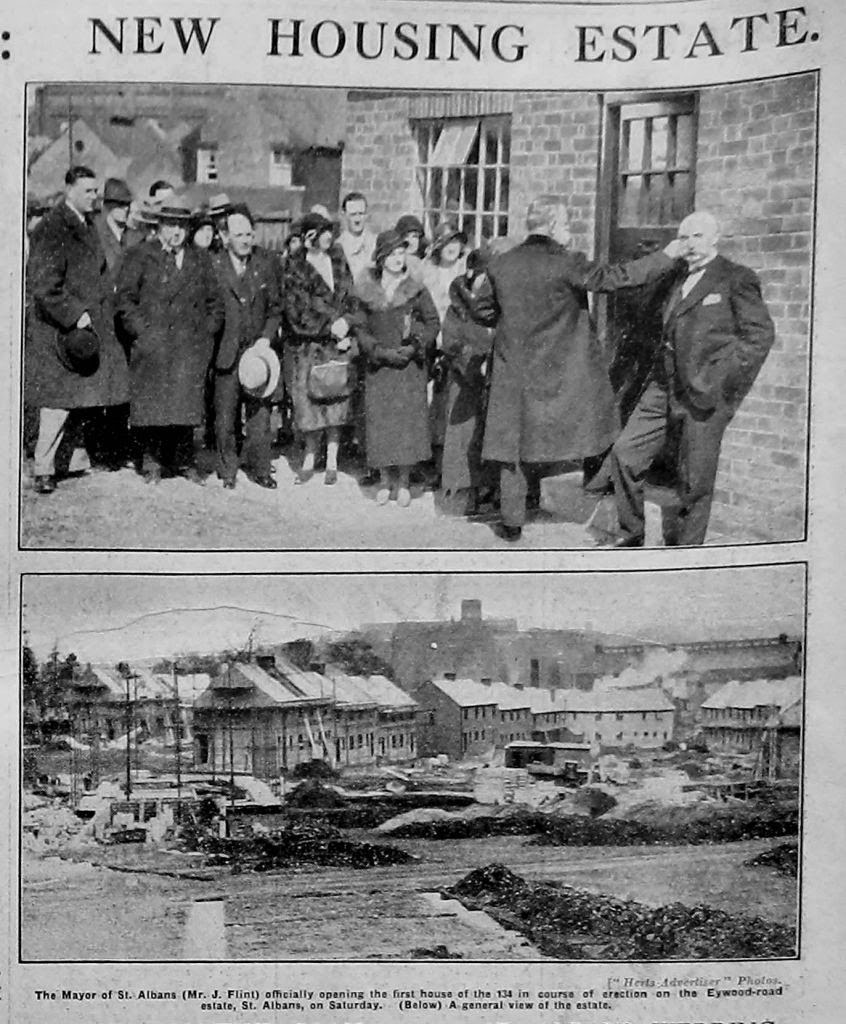
Mayor officially opening first house in Eywood estate
Mayor officially opening first house on the Eywood estate
Thanks must go to fellow historian, Mike Neighbour, who has been indexing photos in the Herts Advertiser. He has sent me some wonderful photos – well not that wonderful in quality as they are as they appeared in the paper – but nevertheless they have added interest to stories which I researched for my book on Sopwell.

One shows the fire at Sopwell Nunnery farm in 1931; another is the erection of houses on the Eywood estate (Doggetts Way and Wilshere Avenue) in 1932; and the third story is about the unsolved murder of Steven Varley in the allotments in 1948.


So three new posts on the Sopwell Memories website for you to enjoy!

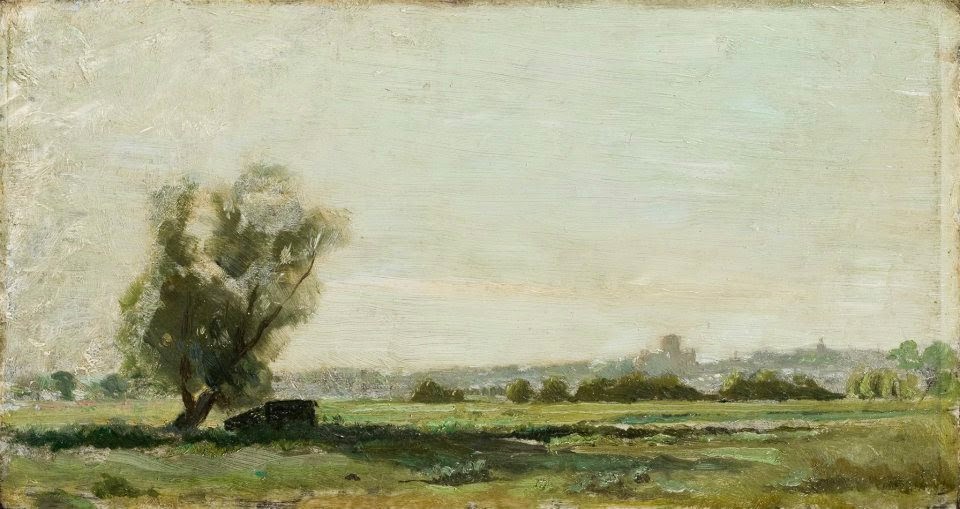
Sopwell Meadows by George Henry Moon
Also thanks to Derek Roft, a friend on Facebook, who has drawn my attention to two lovely paintings by George Henry Moon of Sopwell Meadows. This is the area in the Ver Valley near the Verulam golf course and Sopwell Mill. You can see the Abbey in the background.

When I last looked, there were nearly 27,500 hits on the website which is good which makes it all worthwhile.
  
--
Sandy Norman


Saturday, 14 February 2015

Well, well, well!

Few more posts uploaded to the website to tell you about and an exciting rediscovery!

Posts uploaded lately are: the Cottonmill Swimming Baths, Cottonmill Club, St Stephen’s, Mercer’s Chronometers and one on Miss Lydia Lightfoot of Holywell Hill which has been contributed by Lindsay Seagrim-Trinder. Lydia was born way back in 1875 so what a lovely link to the past that was.

Some time ago I uploaded an item about St Stephen’s Vicarage which described the house and the garden. This was written in the early 1920s by the incumbent Rev. Fielding Ould who wrote down a history of the church in a wonderful almanac which I was given permission to read. This is just one of the fascinating extracts: “The Vicarage garden and grounds (of about 2¼ acres) are of great natural beauty. They include an orchard walled on two sides and adjoining the churchyard, a large lawn on the east side of the house and a small lawn on the west on Watling Street side, a large walled kitchen garden, a glade at the south side of the large lawn, two shrubberies with trees, a pleasant little wood with fine trees opening from the bottom of the large lawn. There is an ancient and picturesque well with the wheels and cogs of wood. It has not been used since the town water became available.” [My italics]

And, I have a photo of this well which dates from the early 18th century illustrating how picturesque it was.


The structure around the well is no longer there but the well is! It has recently been rediscovered near St Stephen’s Church car park. There is nothing to see but a hole in the ground and it will have to be covered over in some way, of course, as it is a danger to man and beast, but what an exciting find! And it is another link to our history. There must be loads of wells in our area of course. Lydia Lightfoot had one in her garden at 61 Holywell Hill and the “Holy Well” is just up the road. It would be good to plot more of them. Let me know if you find one.

--
Sandy Norman


Tuesday, 13 January 2015

Roads and railways

Happy New Year to all my readers!

Now that I am not obliged to write a blog on a regular basis, I am afraid I have not been doing so. However, I have not been lazy! I have been working on my own family tree which has been sadly neglected since I started on this project.

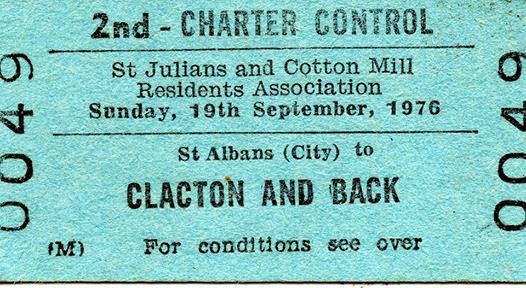
Rail ticket

I have posted several new items on our website www.sopwellmemories.org.uk and have added more memories and photos to existing posts. For example, I found some quality photos, courtesy of the Smallford Station Project website, of the Hatfield rail link from the 1950s showing the watercress beds in Riverside Road (now the Watercress Wildlife Area) and children playing on the line – naughty, but we know it went on. Did you know that it is the 150th anniversary of the Hatfield Rail link this year? I am sure there will be celebrations. And talking of watercress, there was a comment sent to me about another family called the Paynes who also grew watercress in St Albans. The family lived in Pageant Road. Does anyone recall this?

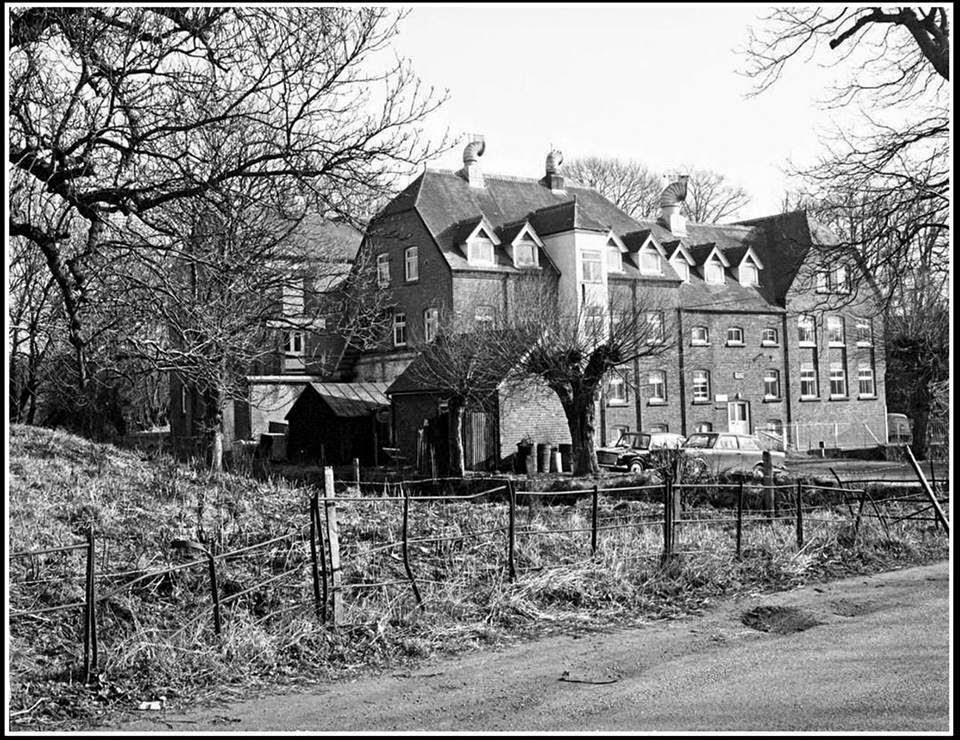
New Barnes Mill c1970s
I have also been looking at the census returns for those Sopwell roads and buildings that existed from 1851 - 1911. There weren’t that many of them in the early days. Going as far back as 1851, there was only St Stephen’s Vicarage, St Stephen’s (near the church), Sopwell Mill, Sportsman’s Hall and New Barns (sic). By 1861, it is clear that St Stephen’s is what is now called Watling Street. I have written about Prospect Road and St Julian’s farm and am presently working on St Stephen’s Vicarage. So keep watching.

The website is proving very popular and we have had nearly 20,000 visitors which isn’t bad. We haven’t interviewed anybody lately but we are still willing to do so if we get a whiff of a good memory.

--
Sandy Norman


Friday, 29 August 2014

End of the project – not really

In two days' time, on the 31st of August, the Sopwell Memories project officially ends. I have submitted my digital record – of which this blog is part – and also the required end-of-project report. Almost all of the Heritage Lottery Fund (HLF) £10,000 money has now been spent. So thank you Heritage Lottery!

I hope you will agree that we have done what we set out to do and produced a wonderful website at www.sopwellmemories.org.uk – something Sopwell should be proud of!

On our journey, we have interviewed many lovely people about their memories and transcribed the recordings; we have edited these and posted them on the website; and we have collected many more images and maps of the area and added these.

If you still haven’t seen how we did all this, then you have two days left in which to visit our exhibition at the Museum of St Albans in Hatfield Road. We are obliged to take it down on 1st of September.

Sopwell History Walks Leaflets

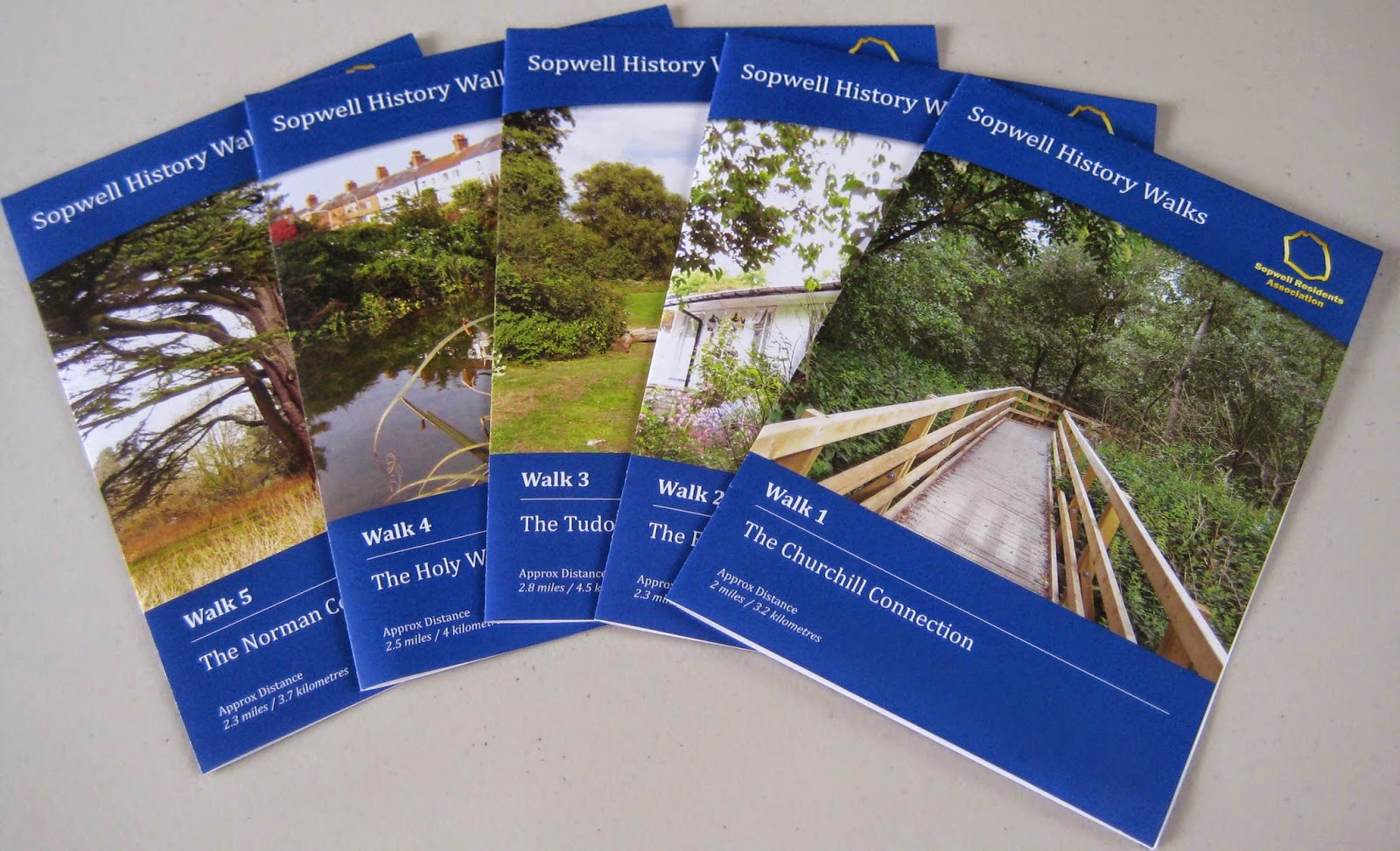
As our final gift to you, and courtesy of the HLF again, we, that is the Sopwell Residents Association, have published a set of five Sopwell History Walks leaflets to encourage visitors to explore Sopwell and learn a little about its history.

Many of you will be aware that, each year, we organise a walk around our area. These popular walks, which explore our history and green spaces, started several years ago, and there has always been a lot of interest in them. So, in our request for a grant from the Heritage Lottery Fund for the Sopwell Memories project, we asked for some money to print walk leaflets. And these are the result!

The five short and fairly easy circular walks were beautifully produced by Diverse Print and Design, the company who also did our book Sopwell: a history and collection of memories. And our own Barry Bateman has drawn by hand a beautiful map in each, so you shouldn't get lost.

The leaflets are free and available from the Museum of St Albans and from the Tourist Information Centre in the old Town Hall. Pick one or two up when you are passing!

In addition, you can view/download them in PDF format from the Sopwell Memories website.

As I said before, it may be the end of the project, but we will still be collecting memories to add to the website, so if you want to take part and tell us your story, please get in touch.

--
Sandy Norman


Thursday, 7 August 2014

Have you seen it yet?

The Sopwell Memories exhibition held in the Museum of St Albans in Hatfield Road is up and running and will remain there until the end of August.

The Sopwell Residents Association's team of volunteers has curated it with the help of the museum staff and we think that we have done a really professional job considering we are just a bunch of enthusiastic amateurs.

It is amazing how good we can make it look with the help of a roll of Velcro dots, laminating sheets and foam board.

We have been really fortunate also in being able to borrow the display panels from the Smallford Residents Association. They are also managing an HLF All Our Stories project - the history of Smallford station - so we have been sharing our experiences of running lottery funded projects over the past year or so. Our thanks go to Jeff Lewis and team for helping us out.

We have had lots of favourable comments on the exhibition so far. We would like more so if you haven’t been to see it yet, do go along and let us know what you think. And of course you can still visit the website www.sopwellmemories.org.uk and leave comments and maybe your memories.

--
Sandy Norman


Saturday, 19 July 2014

Sopwell Memories exhibition at the Museum of St Albans

We are pleased to announce that, to accompany the launch of the Sopwell Memories website, www.sopwellmemories.org.uk, there will be a free exhibition, which we have curated, of the story behind the website at the Museum of St Albans in Hatfield Road, from 1-31 August 2014.

Do come along to see it!

Sopwell Memories exhibition poster August 2014

Many residents and past residents have contributed their memories in the form of oral history recordings and photographs and to date over 40 people have been interviewed resulting in 137 posts. The website is interactive, so you may add your own comments and memories.

Project Manager, Sandy Norman, says: “It has been really enlightening talking to past and present residents about their memories. These would be lost to future generations if we had not decided to preserve and celebrate them. Their stories and photographs will be an invaluable resource for education institutions and social historians as well as the general public.”

Please look at the website and if possible, drop in to see the exhibition.


Saturday, 14 June 2014

It’s downhill all the way

The new www.sopwellmemories.org.uk website is being read and you all seem to like what we have done. Some people have posted comments already which is good. Keep them coming and feel free to let me have any new images of yours to add to what we have already.

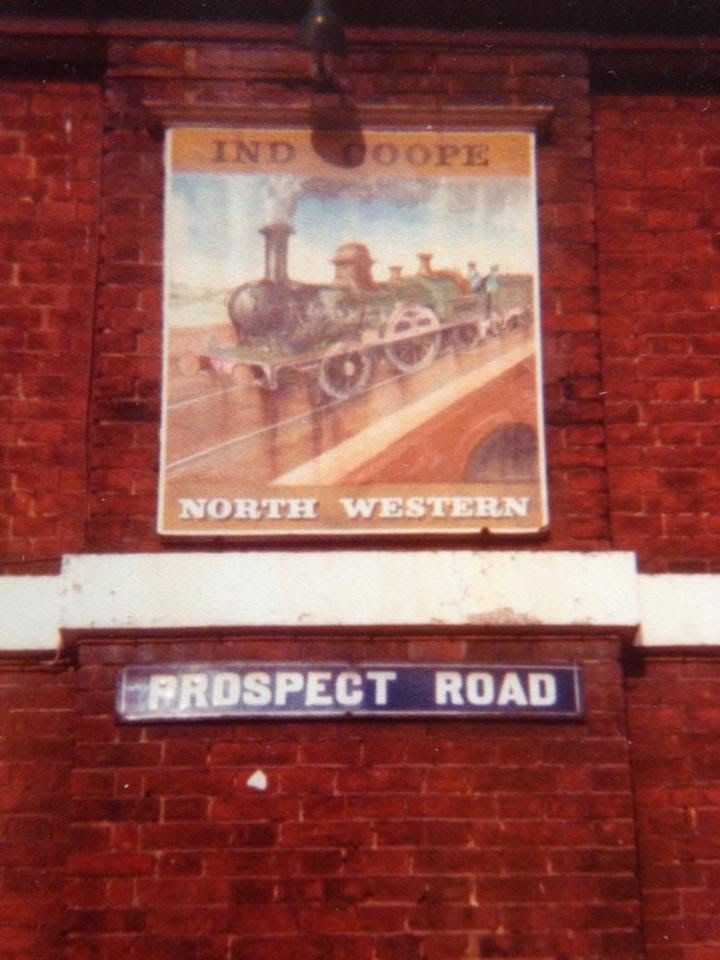
North Western hotel sign
I have posted several interesting stories this month.

If you have not yet had a look at the post about the North Western hotel from Grant Peerless, it is worth a look and listen.

Grant lived in the hotel which was on the corner of Prospect Road and Holywell Hill, in the 1940s and 1950s. Originally a late Victorian railway hotel, it no longer exists of course. It had a spell of being the Abbey Tavern before finally closing to make way for offices.

Also interesting were the stories told to me by Brian Welch who lived on Holywell Hill at one time in one of the houses belonging to the Colne Valley Water Company – remember them? Brian was one of the so called ‘vandals’ who was instrumental in preserving the site of the Holy Well.

And more stories about Holywell Hill come from Jennifer Taylor whose father owned the Adaire ladies fashion shop at the Peahen hotel. Jennifer went to school on Holywell Hill too.


The More Memories of Sopwell project ends in August but we are going out with a splash. We will be having an exhibition of all our work in the museum in Hatfield Road for the whole of the month of August. We know you will enjoy it.

I still have lots of information to put on the website so keep checking now and then.

--
Sandy Norman